






Our News

HUILE D'OLIVE FRBIO-10 EXTRA VIERGE DE PHILIPPE DU MAS DES FIGUES
L'HUILE D'OLIVE BIOLOGIQUE DE PHILIPPE, DU MAS DES FIGUES À SAINT-RÉMY-DE-PROVENCE
Une extraction à froid pour préserver la richesse de l'olive
Au Mas des Figues, nos olives sont récoltées en novembre, au moment de la véraison, lorsque leur couleur passe progressivement du vert au violet, puis au noir.
Notre domaine est certifié en agriculture biologique par Bureau Veritas (FR-BIO-10).
Nous cueillons les olives directement sur les arbres à l'aide d'une perche télescopique électrique Pellenc. Nous avons choisi cette méthode pour travailler avec précision, sans recourir aux engins de secouage mécanique des troncs, afin de ménager les oliviers et de limiter les chocs sur les fruits.
Les olives sont ensuite acheminées très rapidement chez Éric, au Moulin Bio de Bournissac, aux Paluds de Noves, pour y être transformées.
Notre huile est obtenue par centrifugation, selon un procédé mécanique d'extraction à froid, à une température inférieure à 27 °C.
Une seule extraction, sans repasse.
Les résidus de la première extraction ne sont pas réintroduits dans un nouveau cycle de récupération de l'huile. Nous faisons le choix d'une extraction unique, sans rechercher le rendement maximal.
Pourquoi ce choix ?
Parce que la maîtrise de la température contribue à préserver les arômes naturels de l'olive, ses composés phénoliques, notamment les polyphénols, et toute sa richesse gustative.
Notre huile conserve ainsi sa personnalité : son fruité, ses notes végétales, son amertume délicate et son léger piquant.
Des analyses indépendantes pour contrôler sa qualité
Après son élaboration, notre huile est confiée au laboratoire Phytocontrol, à Châteaurenard, pour y réaliser des analyses indépendantes.
Ces contrôles portent notamment sur :
- La recherche de résidus de pesticides, parmi les substances recherchées par le laboratoire ;
- L'acidité libre, exprimée en pourcentage d'acide oléique (≤ 0,8 % pour la catégorie vierge extra) ;
- L'indice de peroxyde (≤ 20 mEq O₂/kg) ;
- Les indices K232, K270 et ΔK, mesurés par spectrophotométrie dans l'ultraviolet, qui renseignent notamment sur l'état d'oxydation de l'huile.
La qualification « vierge extra » doit également satisfaire aux critères organoleptiques réglementaires : absence de défaut perceptible et présence d'un fruité. Elle ne peut donc pas être établie par les seules analyses chimiques.
Nous publions les résultats des analyses, en toute transparence.
De l'arbre à la bouteille, nous cherchons à respecter l'olivier, à préserver le fruit et à contrôler la qualité de ce que la nature nous offre.
Huile d'olive vierge extra biologique – Alpilles, Provence.
La nature en culture – Mas des Figues.
Références réglementaires
- Règlement délégué (UE) 2022/2104 – catégories et caractéristiques de qualité.
- Règlement d'exécution (UE) 2022/2105 – mentions « extrait à froid » et méthodes de contrôle.
- DGCCRF – L'huile d'olive : l'étiquette vous informe sur l'origine et la qualité.
PHILIPPE'S ORGANIC OLIVE OIL, FROM MAS DES FIGUES IN SAINT-RÉMY-DE-PROVENCE
Cold extraction to preserve the richness of the olive
At Mas des Figues, our olives are harvested in November at veraison, when their color gradually shifts from green to purple, and then to black.
Our estate is certified organic by Bureau Veritas (FR-BIO-10).
We harvest the olives directly from the trees using a Pellenc electric telescopic pole. We chose this method to work with precision without relying on mechanical trunk shakers, in order to protect the olive trees and minimize bruising to the fruit.
The olives are then promptly transported to Éric at the Moulin Bio de Bournissac in Les Paluds de Noves for milling.
Our oil is obtained by centrifugation, using a mechanical cold-extraction process at a temperature below 27 °C (80.6 °F).
A single extraction, with no second pressing.
The pomace from the first extraction is never reprocessed in a secondary oil-recovery cycle. We make the deliberate choice of a single extraction, without chasing maximum yield.
Why this choice?
Because temperature control helps preserve the olive's natural aromas, its phenolic compounds—particularly polyphenols—and its full flavor profile.
Our oil thus retains its distinct character: its fruitiness, grassy notes, delicate bitterness, and gentle peppery finish.
Independent lab testing for quality assurance
Once produced, our oil is sent to the Phytocontrol laboratory in Châteaurenard for independent testing.
These tests specifically cover:
- Pesticide residue screening, across the substances tested by the laboratory;
- Free acidity, expressed as a percentage of oleic acid (≤0.8%\le 0.8\%≤0.8% for the extra virgin grade);
- Peroxide value (≤20 mEq O2/kg\le 20 \text{ mEq O}_2/\text{kg}≤20 mEq O2/kg);
- K232, K270, and ΔK\Delta KΔK indices, measured by UV spectrophotometry, which notably indicate the oil's oxidation state.
The "extra virgin" classification must also meet regulatory organoleptic standards: zero perceivable defects and a distinct fruitiness. It therefore cannot be established by chemical analysis alone.
We publish all lab results in complete transparency.
From tree to bottle, we strive to respect the olive tree, preserve the fruit, and verify the quality of what nature provides.
Organic Extra Virgin Olive Oil – Alpilles, Provence. Nature in cultivation – Mas des Figues.
Regulatory References
- Commission Delegated Regulation (EU) 2022/2104 – quality categories and characteristics.
- Commission Implementing Regulation (EU) 2022/2105 – "cold extraction" labeling and inspection methods.
- DGCCRF (French Directorate-General for Competition, Consumer Affairs and Fraud Control) – Olive Oil: How the Label Informs You About Origin and Quality.
#olive_oil_exra_virgin_oganic_mas_des_figues_alpilles_saint_remy_de_provence
image
From Garden to Pan
At Le Mas des Figues, luxury is found in the simplicity of raw, living produce. No tin cans, no frozen foods, no plastic packaging. Just the earth, time, and a love for what is real.
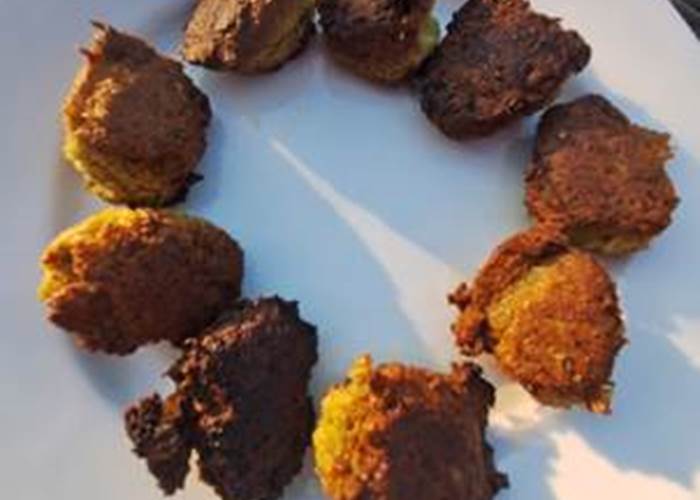
Here is the secret to my Mediterranean falafels, pan-fried to a golden crisp in the estate's green gold.
🧄 Estate Ingredients
250 g dry organic chickpeas (never canned!)
1 sweet garden onion
3 fresh garlic cloves
1 generous handful of fresh flat-leaf parsley
1 generous handful of fresh cilantro (coriander)
1 generous handful of fresh basil from the garden (our special Provençal touch!)
1 tsp ground cumin
A generous pinch of Camargue coarse sea salt & freshly ground black pepper
Our organic PGI olive oil from Le Mas des Figues (for the mixture and for frying)
🧆 The Preparation Ritual
1. Time and patience (24 hours ahead)
Soak the dry chickpeas in a large bowl of pure water at room temperature for 24 hours. They will swell with life without ever being cooked. Drain them thoroughly and dry them well in a clean kitchen towel.
This is the absolute secret for falafels that hold together perfectly without adding flour or eggs!
2. Aromatic blending
In a food processor, combine the raw drained chickpeas, onion, garlic, and your freshly harvested herbs: parsley, cilantro, and basil. Add the cumin, salt, pepper, and one tablespoon of our estate olive oil.
Pulse until you achieve a coarse, slightly grainy texture (not a smooth puree). The mixture should take on a gorgeous green color and release an incredible aroma.
3. Chilling time
Let the mixture rest in the refrigerator for at least 1 hour. This rest allows the flavors to meld and the mixture to firm up.
4. Shaping and gentle pan-frying
Shape into small, slightly flattened patties using your hands or two spoons (flattening ensures even cooking in the pan).
Pour a generous layer of Le Mas olive oil into a frying pan.
️ The frying secret (watch the smoke point!): Always respect the smoke point of extra virgin olive oil! The oil should never smoke (keep a controlled temperature around 160°C - 170°C / 320°F - 340°F). Heat over medium-low flame. Gently lay your falafels in the pan and let them turn golden for about 3 to 4 minutes on each side. They should develop a lovely crunchy golden crust while remaining tender and green on the inside.
5. Serving
Briefly drain on a rack or paper towel, then serve immediately while piping hot, arranged like a sun on the plate.
Enjoy with a drizzle of raw olive oil from the estate, a sprig of fresh parsley, and a slice of our homemade sourdough bread. Pure living food, with no fuss and no fanfare!
Bon appétit,
Philippe — Le Mas des Figues
https://www.saint-remy-de-provence.fr/
Follow me notre Instagram